Free Guide
4 Leadership Habits That Prevent Burnout Before It Starts
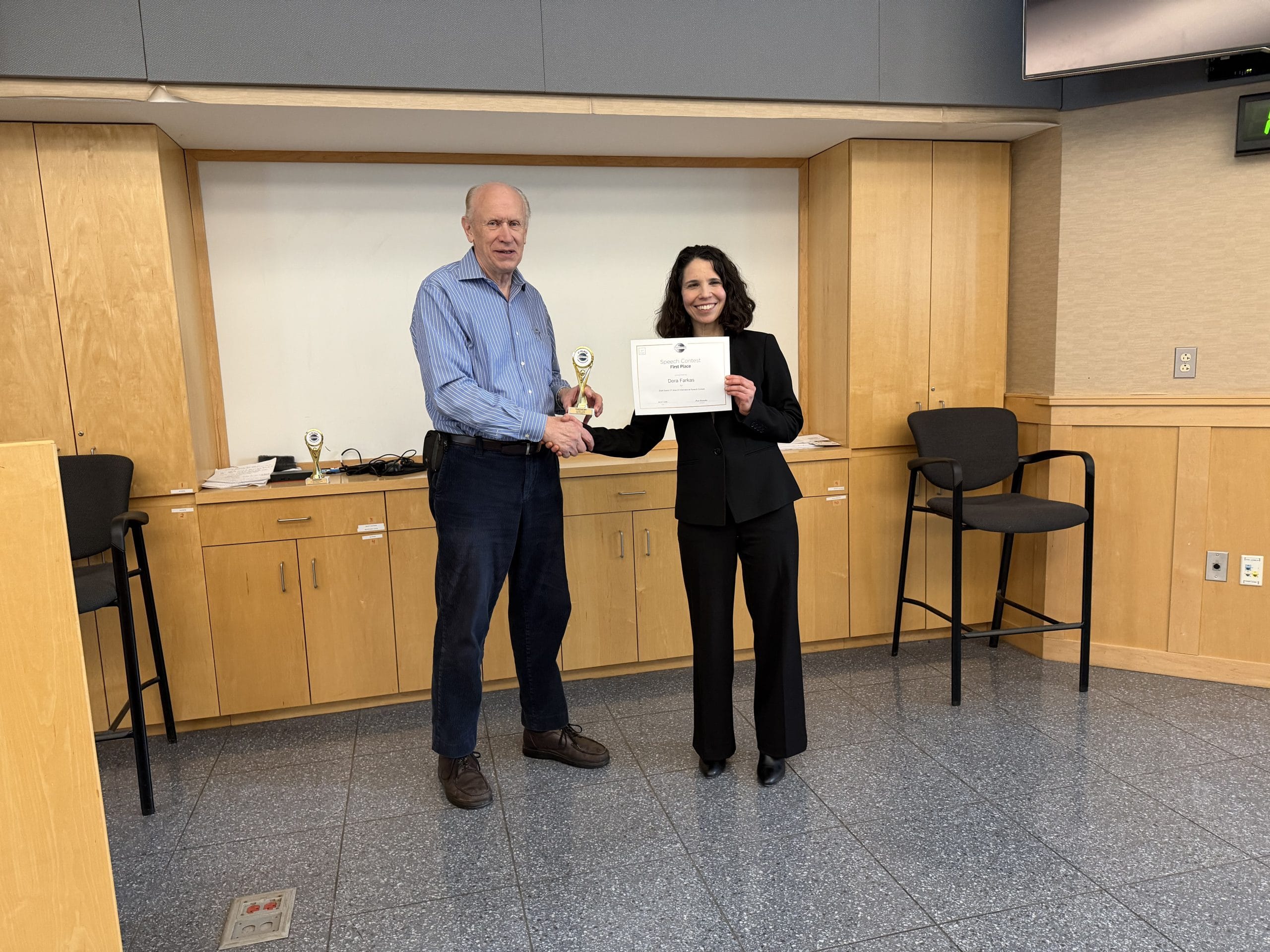
Recently I advanced to the next level in a Toastmasters speech competition.
What made that moment special wasn’t just the competition itself — it was the fact that I delivered my speech without notes.
Two years ago, I couldn’t have imagined doing that.
And the reason I can now stand up and speak from memory has very little to do with natural talent.
It has everything to do with training my memory.
Three years ago, I thought my memory was simply getting worse.
Nothing dramatic — just everyday things.
I would start the laundry and forget to switch it to the dryer. Sometimes it would sit there for days.
One evening I even left a bag of groceries in the car overnight.
Like many people in their 40s and 50s, I assumed this was just part of aging.
I accepted it.
Until I stumbled upon something unexpected.
One day I came across something called memory training.
At first it sounded unbelievable. People memorizing hundreds of numbers, entire decks of cards, or long lists of names.
It seemed like something only unusually gifted people could do.
But when I looked deeper, I learned something surprising.
Most memory competitors are ordinary people who trained their brains.
Memory competitions are actually a mental sport. Competitors practice techniques that help the brain store and retrieve information more efficiently.
And once I learned that, I got curious.
A few months after I began practicing, I signed up for my first memory competition.
It was online.
I didn’t even know who my opponent was — just a username on the screen.
They couldn’t see me, and I couldn’t see them.
But I was still incredibly nervous.
In fact, my heart was beating so hard it felt like it was in my throat.
The challenge was simple: memorize as many names and faces as possible in 60 seconds.
When the round started, my nerves kicked in and I had to consciously slow my breathing.
Then time was up.
I don’t even remember my exact score.
What I remember is that I won the match.
And the feeling was incredible.
Not because I had beaten someone else.
But because I realized how far I had come.
Just a few months earlier, I probably wouldn’t have remembered more than one or two names.
And there I was — a mom in her 40s — winning a memory match.
The biggest impact of memory training hasn’t been competitions.
It has been confidence.
Because when you train your memory, something shifts. You realize your brain is capable of much more than you thought.
That’s why I can now deliver speeches without notes and compete in Toastmasters.
Not because I have a “good memory.”
But because memory is trainable.
Even after 40 or decades later.
Some countries have senior memory competitions.
Research suggests that certain types of cognitive training may even delay dementia. In a large 20-year study of nearly 3,000 adults, participants who practiced specific brain-training exercises had about a 25% lower risk of developing dementia compared with those who did not train their brains.
If you want to improve your memory, here’s one technique you can try right away.
Turn what you want to remember into a vivid mental image.
Our brains remember images far better than abstract information.
For example, if you need to remember to switch the laundry, imagine opening the washing machine and seeing giant colorful socks jumping out at you.
The more unusual or exaggerated the image, the easier it is to remember.
It sounds silly — but that’s exactly why it works.
For years I believed memory decline was inevitable.
Now I know something different.
Your brain is adaptable.
It can grow, change, and strengthen — even later in life.
And sometimes the difference between forgetting groceries in the car and delivering a speech from memory is simply learning how your brain works.
In other words:
Memory isn’t fixed.
It’s trainable.
And you can start today.