Free Guide
4 Leadership Habits That Prevent Burnout Before It Starts


A few years ago, I started noticing small things.
I would forget to switch the laundry.
I once left a bag of groceries in the car overnight.
Nothing dramatic — just enough to make me pause and wonder:
Is this what brain fog feels like?
Like many people, I quietly assumed it was part of getting older.
I didn’t question it too much.
Until something unexpected caught my attention.
I came across the idea of memory training, and at first, it sounded almost unbelievable.
People memorizing hundreds of numbers, names, even entire decks of cards.
It seemed like something reserved for a special kind of brain.
But the more I learned, the more surprising the truth became:
Most memory competitors are not born with extraordinary memories.
They trained them.
That idea stayed with me.
What if my memory wasn’t declining…
What if it was simply untrained?
So I got curious.
I started practicing in small ways.
Learning how to turn numbers into images.
Creating simple mental connections.
Exercising my memory just a few minutes a day.
At first, it felt unfamiliar — almost like learning a new language.
But slowly, something began to shift.
Not just my memory… but my confidence.
That shift carried into other areas of my life.
Including speaking.
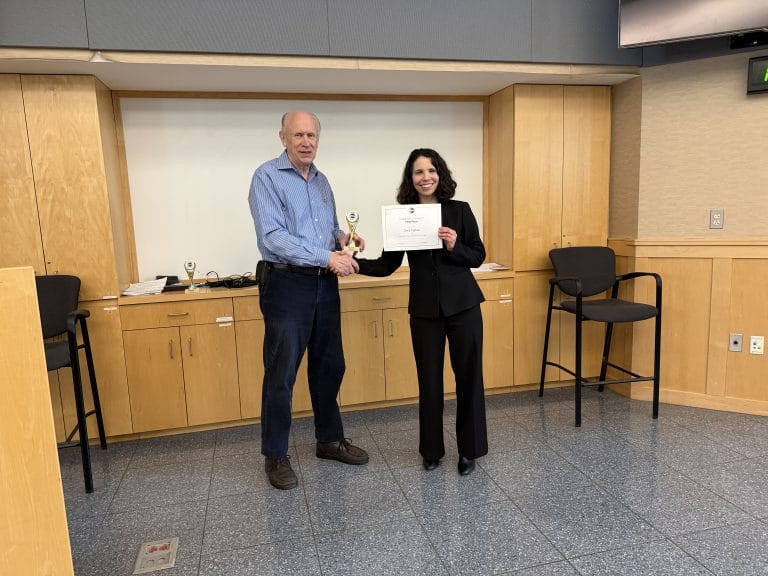
Today, I compete in Toastmasters and deliver speeches without notes — something I never would have attempted just a couple of years ago.
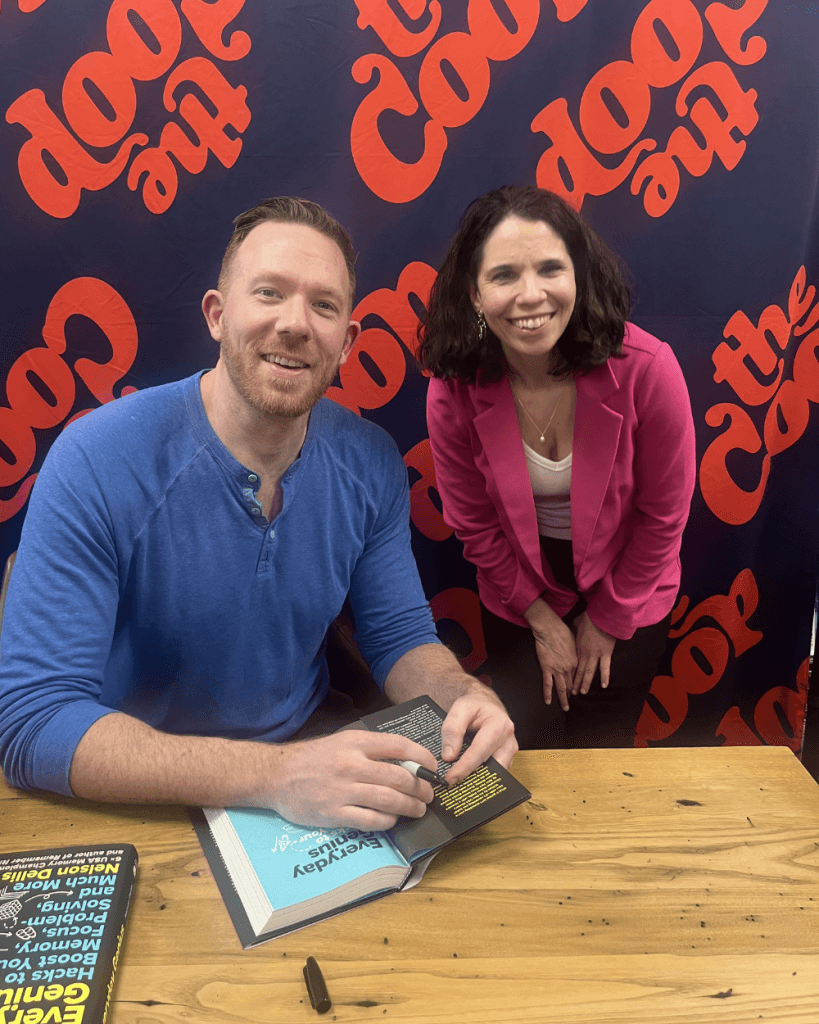
On Pi Day this year, I found myself at the Harvard Coop Bookstore, where my mentor, Nelson Dellis — a 6-time USA Memory Champion — was signing copies of his book, Everyday Genius.
Standing there, I reflected on how far I had come.
And then I did something I never thought I would do.
I recited 800 digits of pi.
Even writing that still feels surreal.
Memorizing 800 digits of pi wasn’t about the numbers.
It was about rewriting a belief.
For a long time, I had quietly accepted the idea that my memory was getting worse.
That I was becoming “less sharp.”
But that moment showed me something different.
With the right kind of training, the brain can improve.
At any age.
If you want to improve your memory, start with something simple:
Turn what you want to remember into a vivid mental image.
Our brains remember images far better than abstract information.
For example, if you meet someone named Rose, pick out a distinguishing feature on their face — maybe their eyes or their nose — and in your imagination, decorate it with bright, colorful roses.
The more vivid and slightly unusual the image, the better.
It may feel a little silly at first, but that’s actually what makes it work. Your brain is much more likely to remember something that stands out.
For years, I believed memory decline was inevitable.
Now I see it differently.
Memory isn’t fixed.
It’s trainable.
And sometimes the biggest shift isn’t in what we remember…
It’s in what we believe is possible.